If you’re choosing between Popl and Cardikit, you’re really choosing between two different “jobs to be done”:
- Do you need an event-ready lead capture system that helps a team scan, qualify, enrich, and sync contacts at conferences?
- Or do you need a clean, modern digital business card that’s easy to share, easy to keep updated, and simple for everyday networking?
This guide breaks down Popl vs Cardikit using a buyer-style framework: what each platform appears designed to optimize for, how sharing works, what “team use” looks like, and how to decide without getting lost in feature noise.
TL;DR: Which one should you pick?
Choose Popl if your highest-value use case is events and in-person lead capture, especially when CRM syncing, badge scanning, and the ability to measure follow-up speed matter.
Choose Cardikit if your highest-value use case is everyday professional networking and you want a fast setup, a web-first sharing flow, and a digital business card that’s simple for recipients to use.
If you’re a team, your best choice depends on whether your team is primarily a “conference-driven pipeline” or “company-wide identity and contact sharing.”
How this comparison works
Instead of trying to declare a universal winner, this Popl vs Cardikit comparison uses criteria that show up repeatedly in real buying decisions:
- Sharing methods (NFC, QR codes, links)
- Recipient experience (friction, “no app needed” reality)
- Lead capture vs. contact sharing (what’s captured, where it goes)
- CRM and integration fit (native integrations vs broader connectivity)
- Analytics and outcomes (what’s measurable)
- Team controls (templates, governance, onboarding/offboarding)
- Pricing and total cost of ownership (hardware + subscription dynamics)
What Popl is optimized for
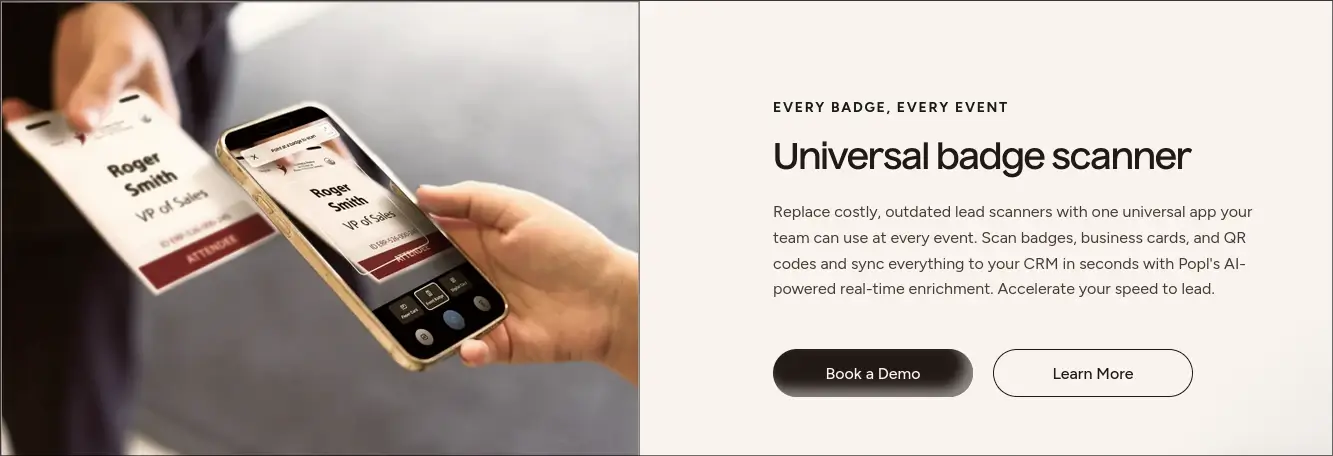
Popl positions itself around in-person GTM workflows: capturing leads at events, enriching contact data, and syncing to CRMs.
Where Popl tends to shine
- Event workflows: badge scanning and fast lead capture for on-the-floor interactions
- CRM-centric teams: when the primary goal is to get clean leads into your CRM quickly
- Measurable outcomes: when leadership wants attribution, reporting, and event ROI visibility
Where Popl may be “more than you need.”
-
If you mainly want a digital business card for day-to-day networking (coffee chats, intros, LinkedIn messages)
-
If your team doesn’t need event-grade lead capture and enrichment most weeks
-
Popl product overview: https://popl.co/
-
Popl “compare alternatives” hub: https://popl.co/pages/compare-popl-alternatives
-
Popl alternatives on G2 (neutral marketplace signal): https://www.g2.com/products/popl/competitors/alternatives
What Cardikit is optimized for
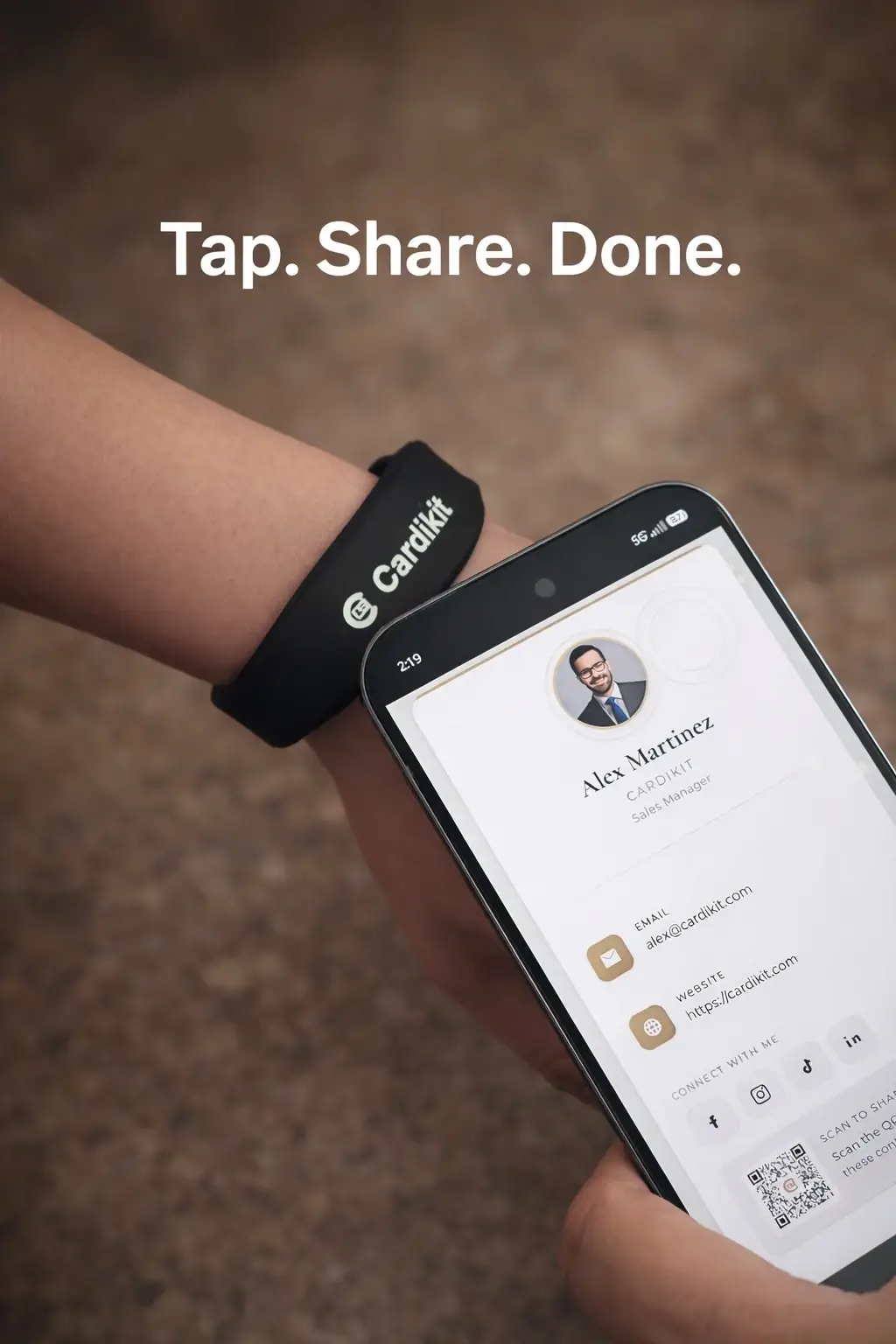
Cardikit positions itself as a web-first digital business card experience designed to be easy to share and easy to keep current, including QR/link sharing and optional NFC-oriented sharing.
Where Cardikit tends to shine
- Simple, fast setup: when you want to get a card live quickly and iterate
- Recipient friendliness: when you want sharing to work smoothly without extra steps
- Modern “profile-first” networking: when the goal is a clean identity layer (contact + links) that updates anytime
Where Cardikit may be less ideal
- If your primary workflow is high-volume event lead capture with enrichment + CRM routing expectations
- If you need a platform that is explicitly built around conference operations
Suggested outbound link (official):
- Cardikit homepage: https://cardikit.com/
Popl vs Cardikit by decision criteria (no tables)
Sharing methods: NFC, QR, and links
Both platforms support the core modern sharing pattern: a person receives a mobile-friendly page and can save your details to their device.
What matters is what you want the share to trigger:
- If the share is “the start of a lead capture workflow,” Popl’s ecosystem is aligned to that.
- If the share is “a fast, clean way to exchange updated info,” Cardikit’s web-first approach tends to be aligned.
Recipient experience: minimizing friction
In practice, the best digital business card is the one that works when the recipient is distracted, busy, or in a hurry.
A strong “Popl vs Cardikit” decision point is whether:
- Your recipient flow is optimized for capturing and routing leads (Popl-style), or
- Your recipient flow is optimized for instant access and simple saving (Cardikit-style).
Lead capture vs simple contact exchange
This is the biggest functional split.
If your team needs:
- structured lead forms,
- qualification,
- and pipeline routing tied to events,
Popl is usually the category archetype you’d shortlist.
If you mostly need:
- a clean contact card,
- links, socials, portfolio/booking links,
- and a card that stays up to date without reprints,
Cardikit is usually the style of product you’d shortlist.
CRM and integrations
If you live inside your CRM, it’s worth evaluating integrations first, not last.
Practical approach:
- List your “must-have” systems (CRM + marketing automation + HR directory if relevant).
- Confirm whether each platform supports your must-haves natively.
- Decide how much you’re willing to rely on connector layers (e.g., Zapier-style workflows) for the rest.
Analytics: what you can measure
Ask what you actually need:
- Individuals usually need lightweight visibility (views, clicks, basic engagement).
- Sales/event teams often need more: lead source, follow-up speed, team activity, and performance by event or campaign.
Team governance and rollout
Teams should not pick a platform based solely on a single rep’s experience.
If you’re rolling out across a team, confirm:
- onboarding/offboarding flow
- template and branding control
- admin roles and permissions
- consistent analytics
Pricing and total cost of ownership
A clean way to evaluate Popl vs Cardikit pricing is to treat it as a total-cost model:
- Software subscription (per user, per team, or per plan level)
- Hardware (if you want NFC cards, wristbands, badges, etc.)
- Paid upgrades to unlock analytics, branding removal, or lead capture depth
- Operational cost: how much time your team spends cleaning lead data and following up
Because pricing changes, use the official pricing pages as the source of truth:
-
Popl pricing: https://popl.co/pages/pricing
-
Cardikit pricing: https://cardikit.com/pricing
-
Digital business cards guide: https://cardikit.com/blog/guides/digital-business-cards-guide
-
Best digital business card apps (2026): https://cardikit.com/blog/tools-and-platforms/best-digital-business-card-apps-2026
FAQs
Do recipients need an app?
In most modern digital business card workflows, recipients can open a card link in a browser. Confirm the exact recipient flow for the plans you’re evaluating before you standardize.
Can I update my info after I share it?
A core benefit of digital business cards is that your shared link stays current when you update your profile details.
Which is better for conferences?
If conferences are your primary pipeline channel, prioritize the platform that best supports event-grade lead capture, enrichment, and CRM sync. Not just digital card design.
Which to choose?
If you’re choosing right now:
- If your next 90 days are conference-heavy, book a Popl demo and validate your CRM workflow end-to-end.
- If you want a clean card you can publish in minutes, create a Cardikit card, and test the recipient experience with 5 real people.
Suggested next step: run a one-week pilot where your team uses only one platform, then evaluate speed-to-follow-up, data quality in CRM, and actual meetings booked. Not just shares.