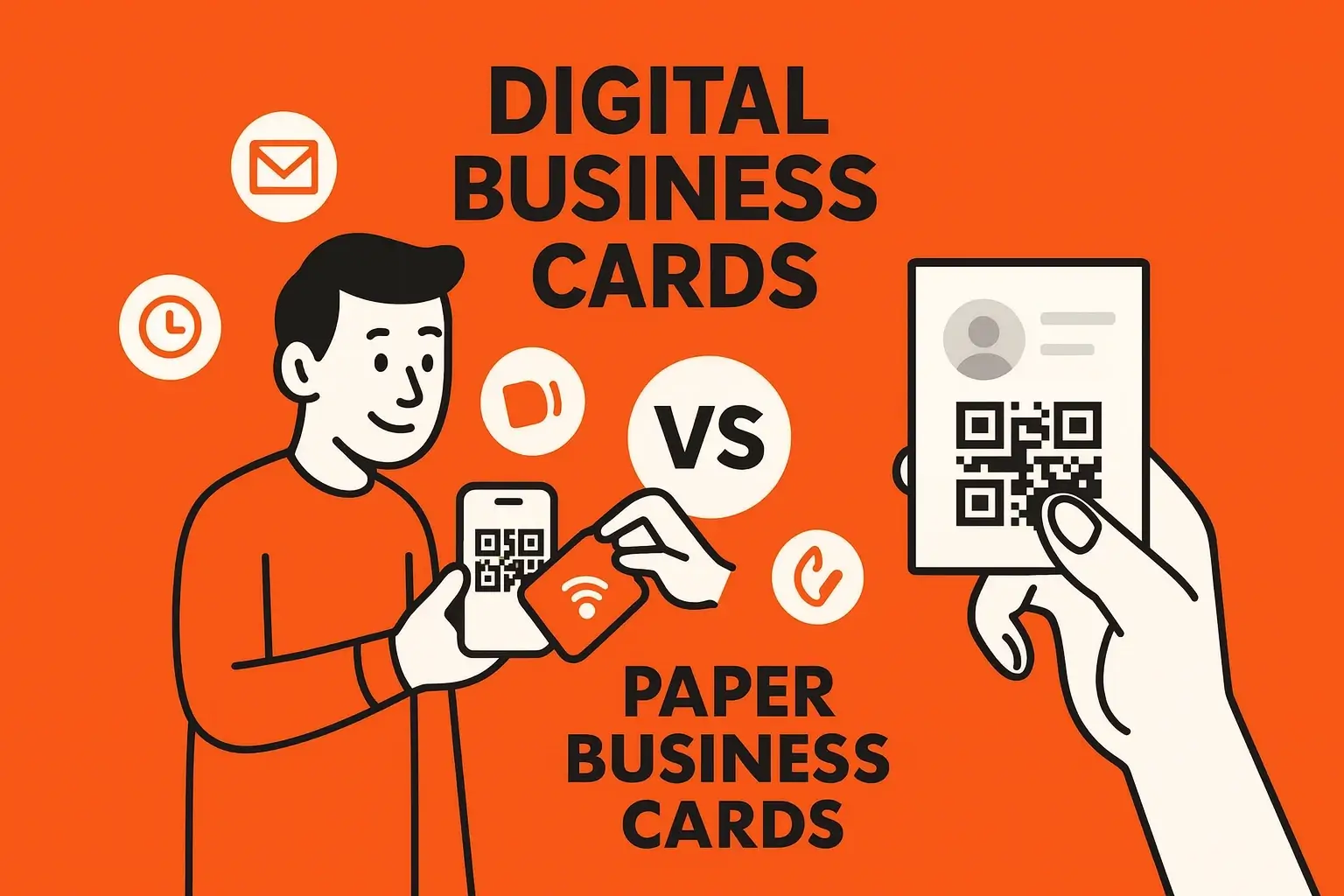
Networking Has Changed. Have Business Cards?
It’s 2026, and networking looks very different than it did even a few years ago. We connect on LinkedIn after webinars, exchange details over text, and meet new contacts online just as often as we do in person.
So that raises a common question for professionals today:
Digital business card vs paper: which is actually better in 2026?
Paper business cards have been a staple of professional life for decades. They’re familiar, tangible, and still widely used. But digital business cards; also known as virtual business cards, have rapidly gained popularity thanks to smartphones, QR codes, and NFC technology.
In this guide, we’ll break down the real differences between digital business cards and paper business cards, looking at cost, convenience, design, environmental impact, and real-world networking scenarios, so you can decide which option makes the most sense for you in 2026.
If you're new to digital business cards, you may want to start with our Digital Business Cards in 2026: The Ultimate Guide, where we break down how they work, key features, and real-world use cases.
What’s the Difference Between Paper and Digital Business Cards?
Paper Business Cards (Traditional)
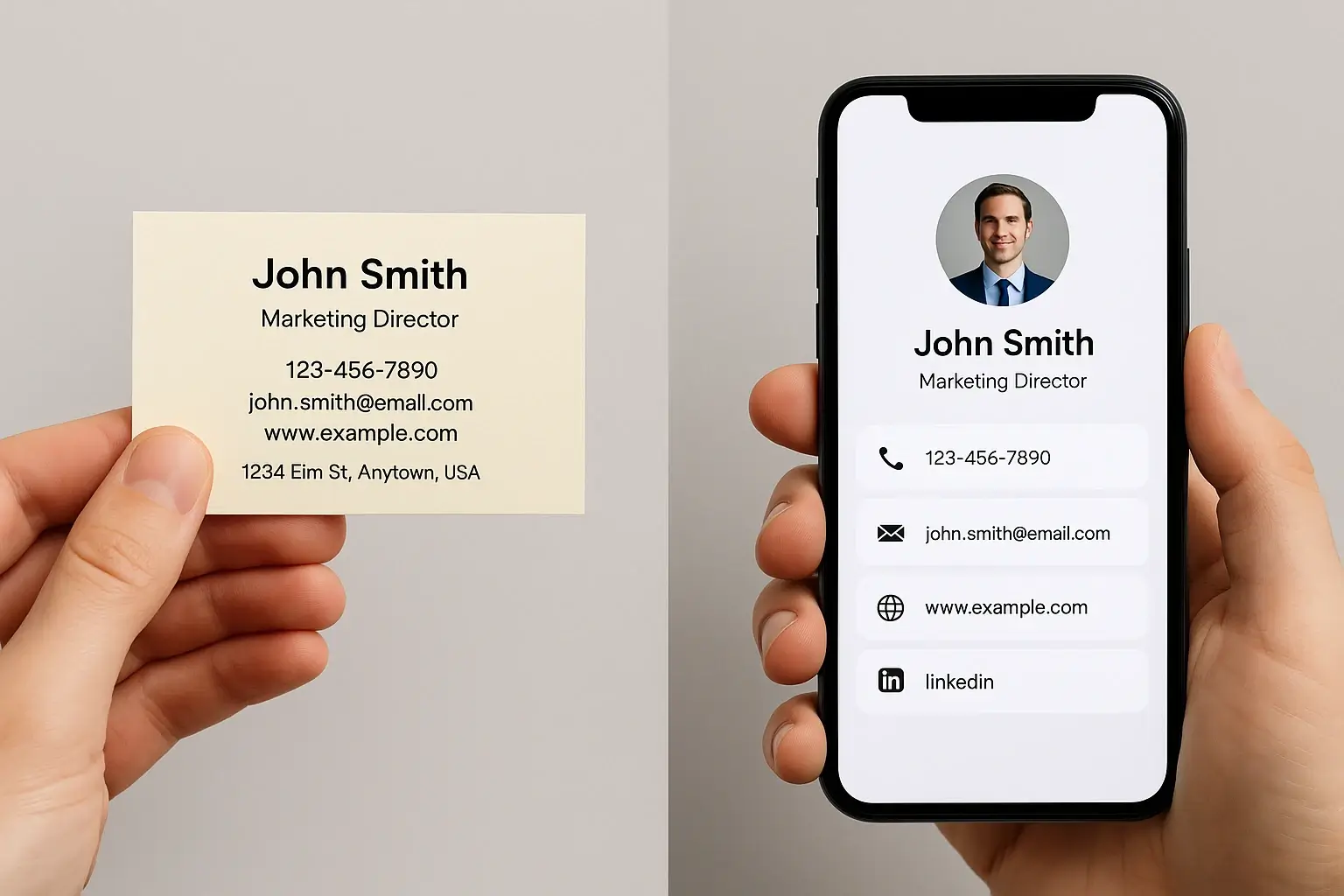
Paper business cards are the classic printed cards most people recognize: a small piece of cardstock with your name, company, title, phone number, and email address.
They’ve been used for generations and still play a role in face-to-face networking, especially in traditional industries.
Strengths at a glance:
-
Tangible and familiar
-
No technology required
-
Can feel personal when handed directly to someone
Digital Business Cards (Virtual)
A digital business card is an online profile or card that contains your professional information and can be shared instantly via:
-
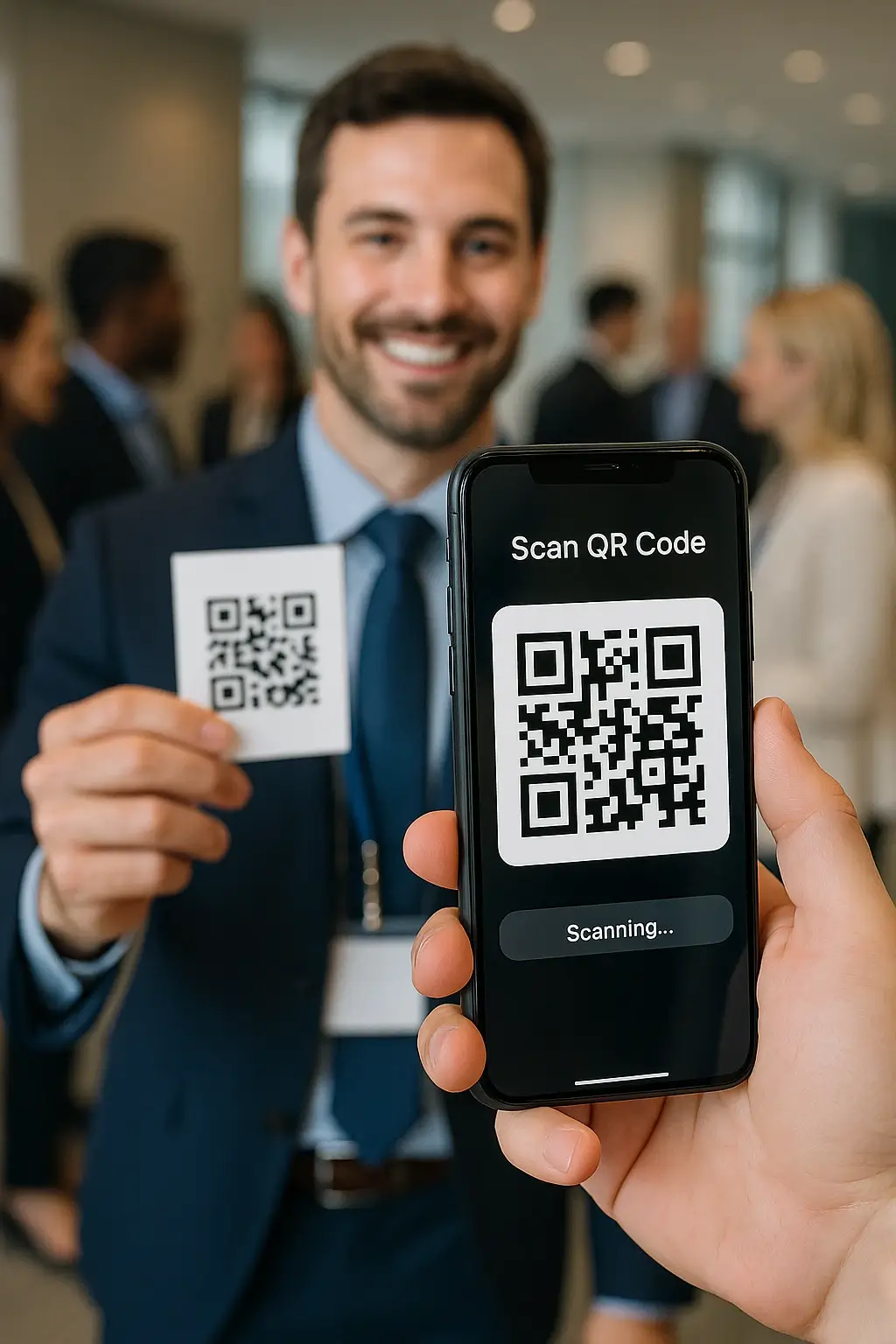
QR codes
-
Text message or email
-
NFC tap
-
Wallet apps or a simple link
Unlike paper cards, digital cards can include photos, social links, websites, calendars, and more, and they can be updated anytime without reprinting.
Also known as: virtual business cards, smart business cards, mobile business cards.
Cost Comparison: Printing Expenses vs Digital Savings
Cost is one of the biggest reasons professionals consider switching.
The Cost of Paper Business Cards
Paper cards might seem inexpensive at first, but costs add up fast:
-
Design fees
-
Printing costs
-
Reprints when your info changes
-
Shipping and waste
Many companies spend $50–$100 per employee per year on business cards. And that’s assuming nothing changes. No new title, phone number, or company branding update.
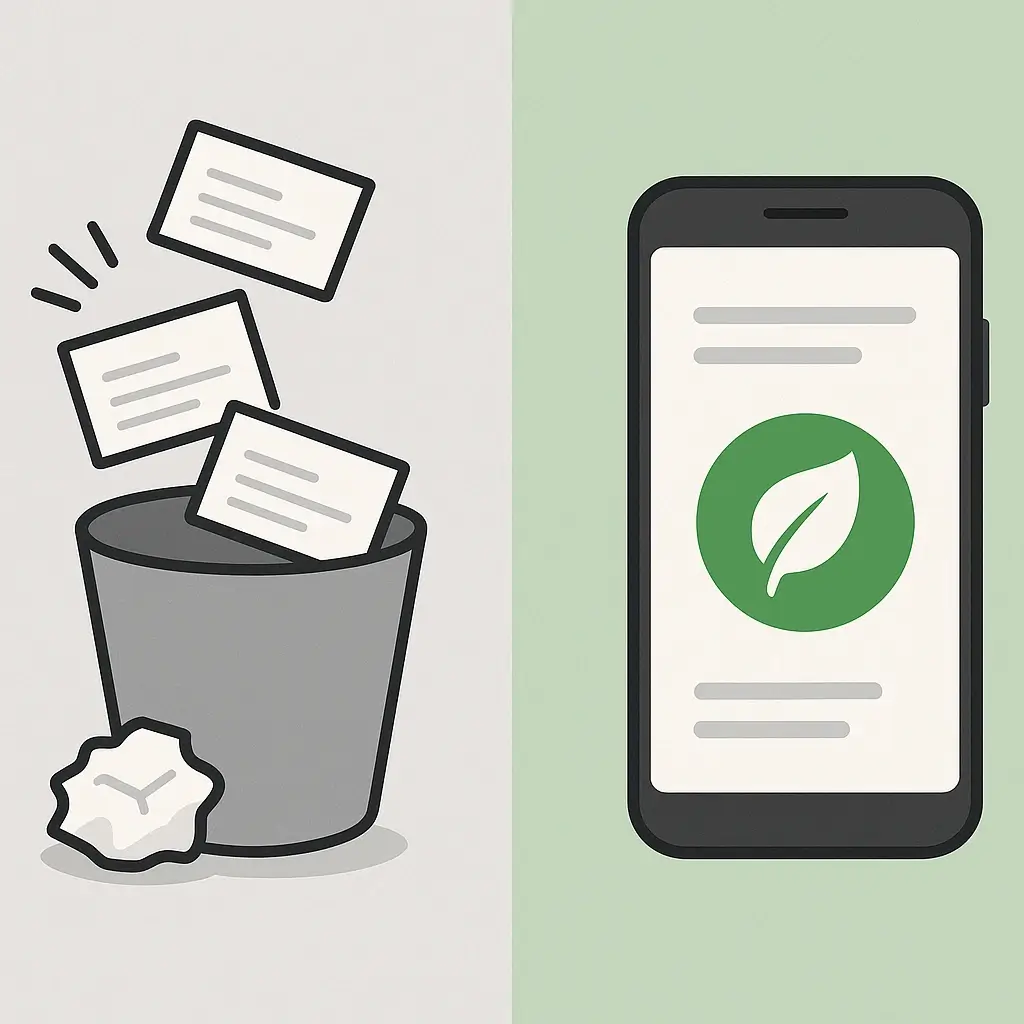
Worse, studies consistently show that 88% of paper business cards are thrown away within a week. That means most of what you pay for ends up in the trash.
The Cost of Digital Business Cards
Digital business cards flip that model entirely:
-
One setup
-
Unlimited sharing
-
Instant updates
-
No printing or shipping
Once you have a digital card, sharing it costs virtually nothing. You can send it thousands of times without reordering or reprinting.
For freelancers, startups, and growing teams, this long-term cost efficiency is a major win.
Convenience & Accessibility: Anytime, Anywhere Sharing
Paper Cards: Limited by Physical Presence
Paper cards only work when:
-
You’re in person
-
You remembered to bring them
-
You didn’t run out
We’ve all been there. A great conversation, followed by “Sorry, I’m out of cards.”
Paper cards also create friction later. Someone has to manually type your info into their phone. Assuming they don’t lose the card first.
Digital Cards: Always With You
Digital business cards live on your phone, which means:
-
You always have your card
-
You can share it remotely
-
No physical inventory to manage
You can text your card after a Zoom call, drop it into an email, or show a QR code at an event. The recipient can save your info instantly. No typing, no mistakes.
Many of the advantages mentioned here, like QR codes, NFC sharing, and analytics are explored in more detail in our ultimate guide to digital business cards.
Design, Customization & First Impressions
Paper Cards: Beautiful but Limited
Paper cards can look great. Premium cardstock, embossing, foil. All of that can make a strong first impression.
But paper has limits:
-
Very little space
-
Static information
-
No links, media, or updates
If something changes, the card becomes outdated instantly.
Digital Cards: Flexible and Dynamic
Digital business cards are highly customizable:
-
Profile photos
-
Logos
-
Websites
-
Social links
-
Calendars
-
Multiple card designs
You can update your information in seconds, change themes, or even maintain different cards for different roles, without carrying multiple stacks.
In 2026, that flexibility often is the first impression.
Environmental Impact: Paper Waste vs Sustainable Networking
This is where the difference becomes impossible to ignore.
The Environmental Cost of Paper Cards
Producing paper business cards requires:
-
Trees
-
Water
-
Ink
-
Energy
-
Transportation
Each year, millions of trees are cut down just to produce business cards. Most of which are thrown away almost immediately.
For individuals and companies with sustainability goals, paper cards work directly against them.
Digital Cards: The Eco-Friendly Alternative
Digital business cards:
-
Use no paper
-
Produce no waste
-
Require no shipping
-
Are endlessly reusable
Switching to digital is one of the simplest ways to reduce paper waste in professional networking.
In 2026, sustainability isn’t a “nice bonus”. It’s expected.
Connectivity, Follow-Ups & Modern Networking
Paper Cards: Passive and Easy to Lose
Once you hand over a paper card, that’s it. You have no idea if:
-
It was saved
-
It was read
-
It was thrown away
There’s no built-in follow-up or insight.
Digital Cards: Built for Action
Many digital business cards integrate with:
-
Contacts
-
Email
-
Calendars
-
CRM tools
Some platforms even provide basic analytics, showing when your card is viewed, helping you time follow-ups better.
In a world driven by speed and data, this is a huge advantage.
Personal Touch & Real-World Drawbacks
To be fair, digital cards aren’t perfect.
Where Paper Still Wins
Paper business cards:
-
Feel personal and traditional
-
Don’t require phones or batteries
-
Are still expected in some industries
Some people enjoy the ritual of exchanging physical cards. Others work with clients who prefer something tangible.
Digital Limitations to Consider
Digital cards require:
-
A working phone
-
A small learning curve
-
Comfort with technology
Occasionally, someone will still ask, “Do you have a real card?”
Many professionals solve this by keeping a few paper cards as backup. Often with a QR code linking to their digital card.
Digital vs Paper in 2026: The Verdict
So, which is better in 2026?
For most professionals, the answer is clear:
Digital business cards win on cost, convenience, sustainability, and flexibility.
Paper business cards aren’t completely obsolete, but they’re no longer the default. They’ve become situational, while digital cards are becoming the standard.
If you:
-
Network online or hybrid
-
Want to save money long-term
-
Care about sustainability
-
Want easier follow-ups
Then digital business cards are simply the better choice in 2026.
Want a deeper breakdown of features, platforms, and future trends? Read our complete digital business cards guide for 2026.

Ready to Try a Digital Business Card?
If you’re curious about switching, the best way to decide is to try one.
Platforms like Cardikit let you create a digital business card in minutes. No printing, no waste, and no commitment. You can share it instantly, update it anytime, and see how much smoother modern networking can be.
👉 Create your digital business card and experience the difference for yourself.