Digital business cards have gone from “nice-to-have” to essential networking tools. Whether you’re meeting leads at a conference, onboarding a team, or sharing your info online, digital business cards are faster, cleaner, and easier to update than paper.
But there’s one big decision people run into fast:
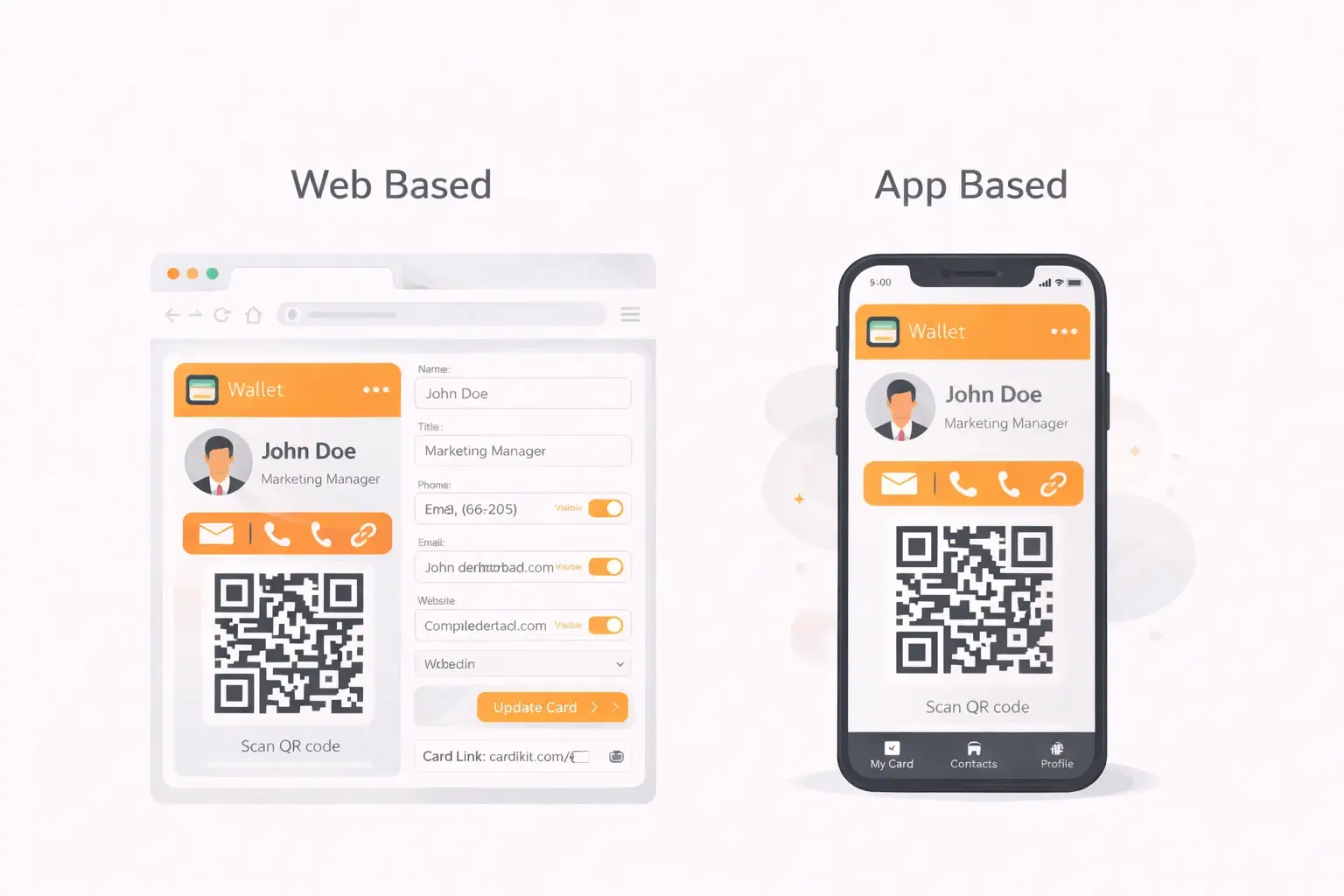
Should you use a digital business card app, or a web-based digital business card?
Let’s break it down in plain English. No fluff. No hype. You can confidently choose what works best for your situation.
What Are Digital Business Cards (And Why Everyone’s Switching)?
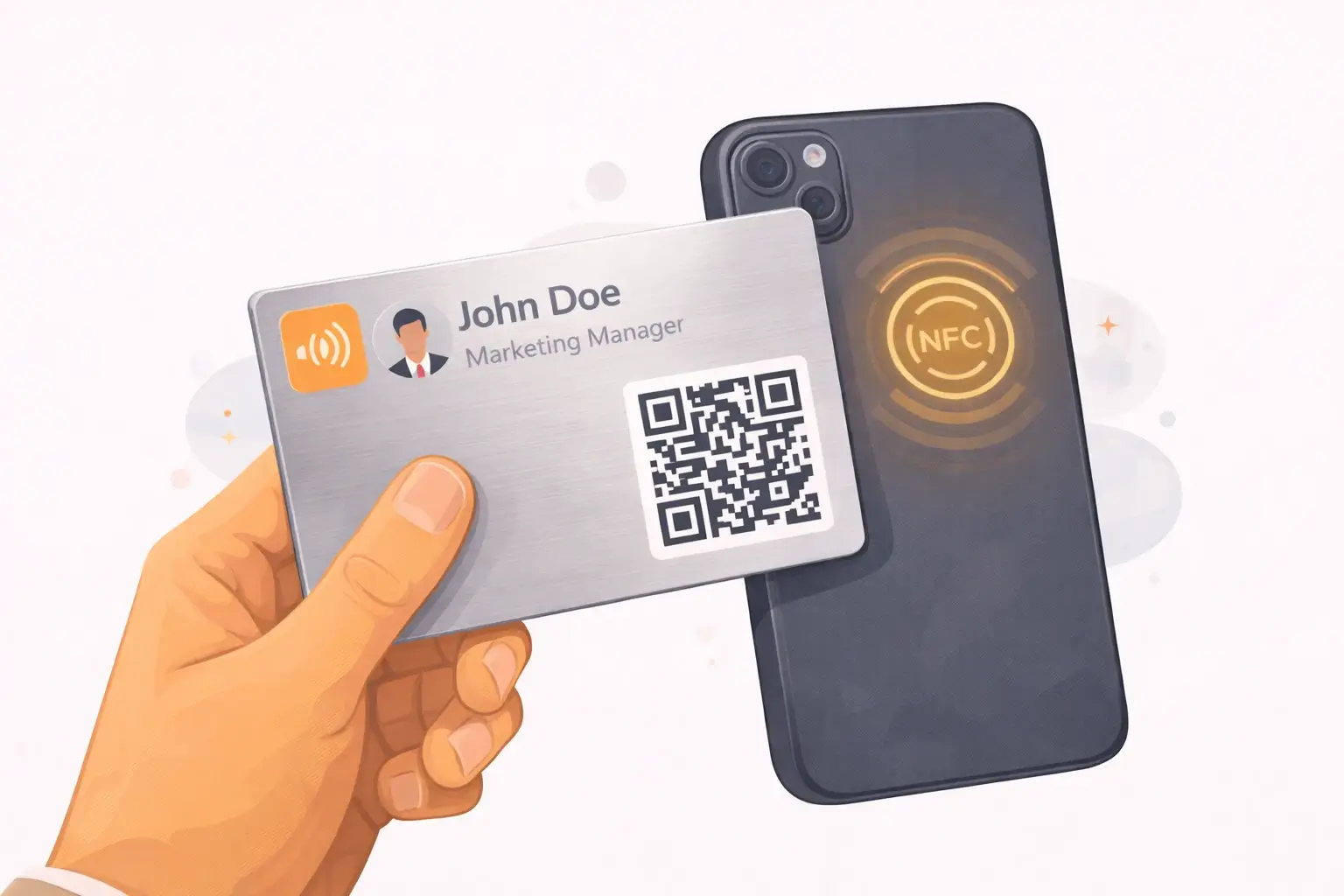
A digital business card is an online version of your contact card. Instead of handing someone paper, you share a QR code, link, NFC tap, or wallet card that instantly opens your profile.
See the top 11 digital business card platforms.
Most modern digital business cards let you:
-
Share contact info instantly
-
Update details without reprinting
-
Add links, socials, calendars, and more
-
Track engagement (on advanced platforms)
Today, these platforms come in two main flavors:
-
App-based digital business cards
-
Web-based digital business cards
Let’s look at each.
What Is an App-Based Digital Business Card?
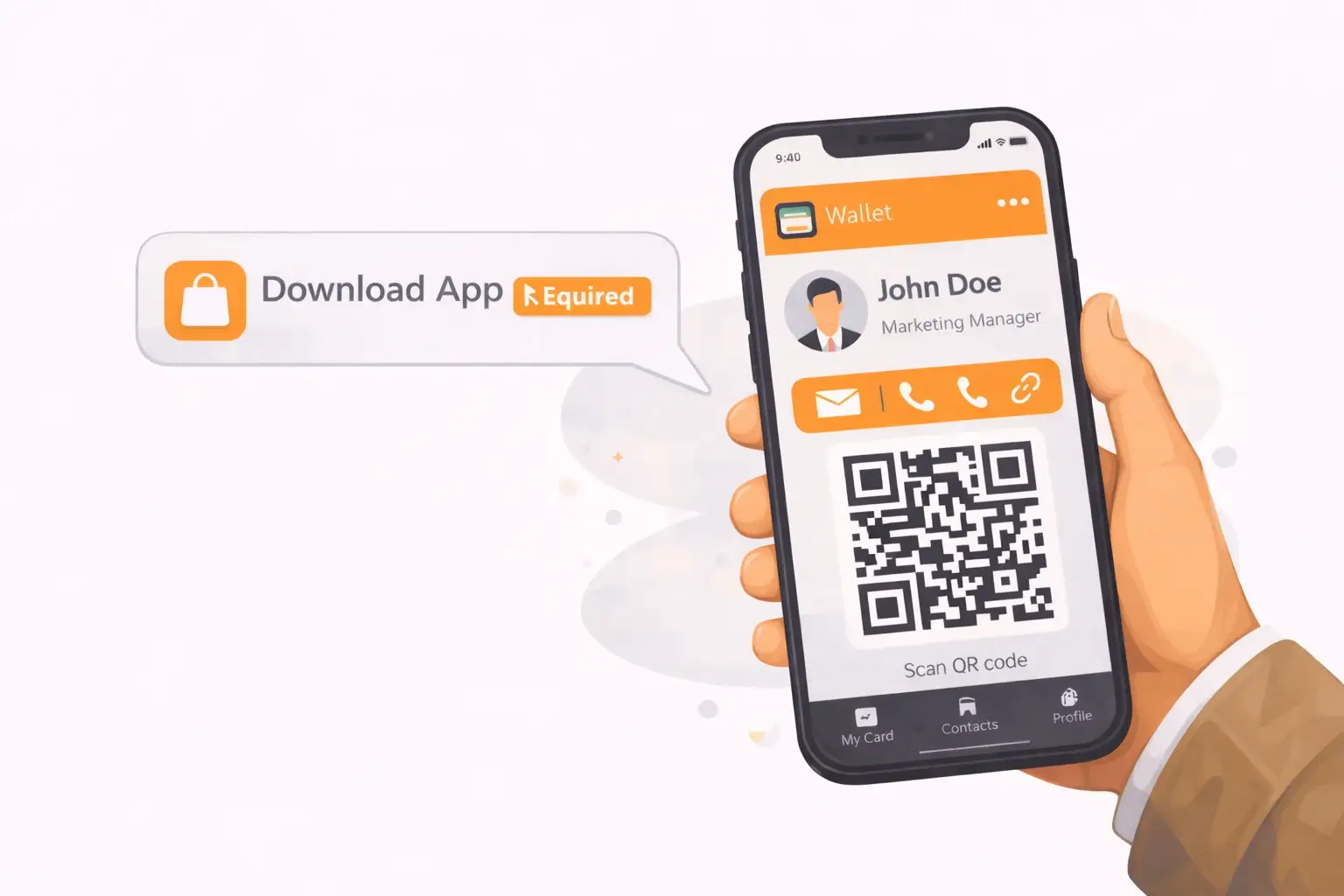
An app-based digital business card lives inside a mobile app you install on your phone.
You typically:
-
Download an iOS or Android app
-
Create your digital business card inside the app
-
Share via QR code, text, email, or in-app tools
✅ Pros of App-Based Digital Business Cards
-
Often work offline once set up
-
Deep phone integration (camera, contacts, NFC)
-
Advanced features like scanning paper cards or adding notes
-
You’re always logged in and ready to share
❌ Cons of App-Based Digital Business Cards
-
Requires downloading an app
-
Some recipients assume they also need the app
-
Can be a barrier for large teams or enterprises
-
Takes up phone storage (small, but real)
What Is a Web-Based Digital Business Card?
A web-based digital business card lives online and opens in any browser.
You create your card on a website, then share it via:
-
A link
-
A QR code
-
NFC tap
-
Apple Wallet or Google Wallet
No app required. For you or the recipient.
✅ Pros of Web-Based Digital Business Cards
-
No installation required
-
Works on any device instantly
-
Extremely easy to share
-
Ideal for large teams and events
-
Central updates apply to everyone immediately
❌ Cons of Web-Based Digital Business Cards
-
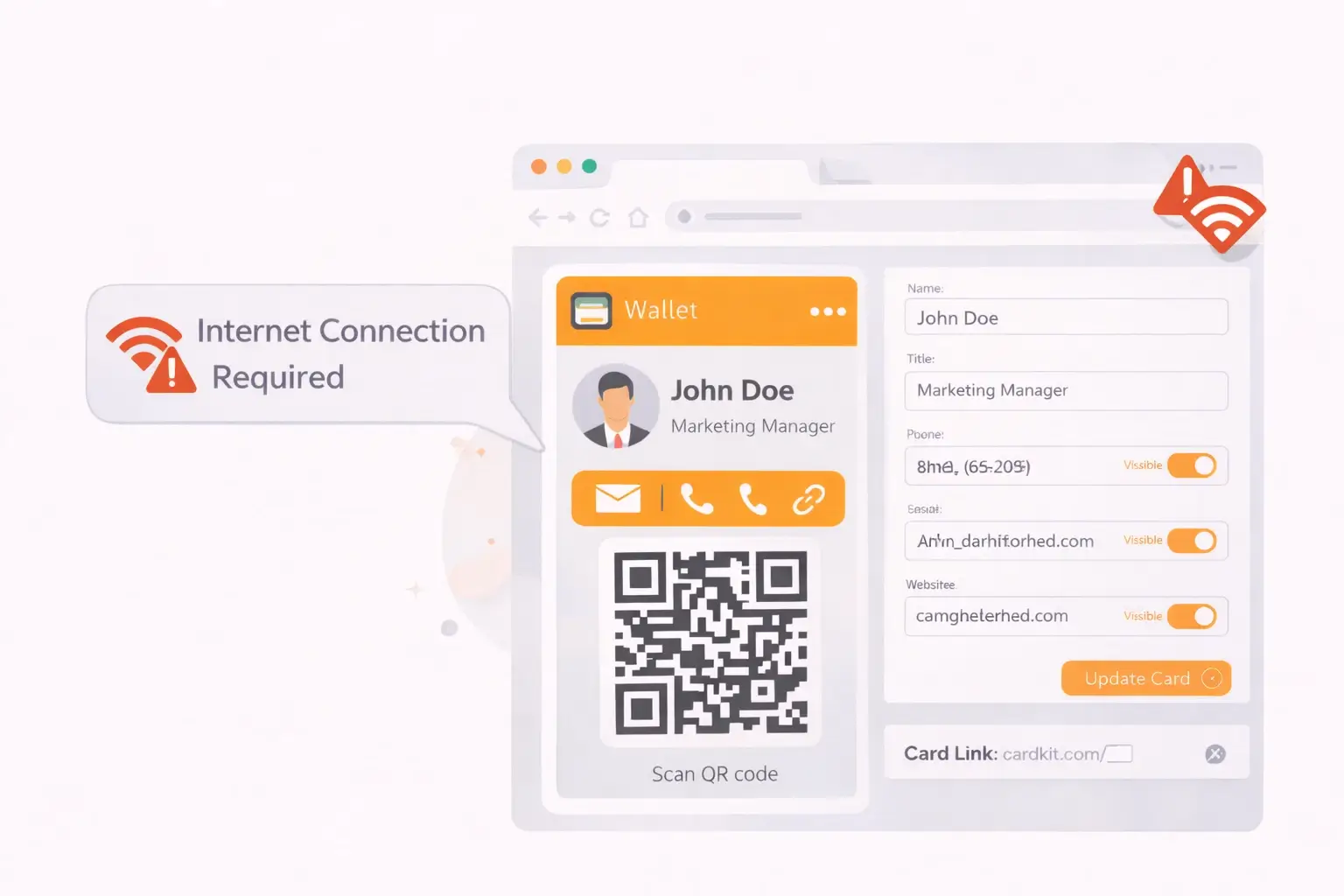
Requires internet access unless saved to wallet
-
Slightly fewer phone-native features
-
No offline editing without cached access
App vs Web-Based Digital Business Cards: Key Differences
Here’s a quick, practical comparison:
-
Installation
-
App-based: Requires a download
-
Web-based: No install at all
-
-
Offline Use
-
App-based: Usually yes
-
Web-based: Yes if saved to wallet
-
-
Ease of Sharing
-
App-based: QR, in-app sharing
-
Web-based: QR or link—works everywhere
-
-
Team Adoption
-
App-based: Can face resistance
-
Web-based: Much higher adoption
-
-
Device Integration
-
App-based: Strong native integration
-
Web-based: Browser-based, lighter footprint
-
Here is some more information on which digital business card platforms you should use.
Real-World Scenarios (This Is Where It Gets Interesting)
Scenario 1: Conference with bad Wi-Fi
Sarah attends a trade show. Wi-Fi is spotty. Some people struggle to download apps.
➡️ A web-based digital business card opened instantly via QR in a browser.
Scenario 2: Sales rep in the field
John scans paper cards, saves notes, and follows up daily.
➡️ An app-based digital business card gives him tools web cards don’t.
Scenario 3: Company onboarding 100 employees
HR wants instant adoption—no friction.
➡️ A web-based digital business card wins every time.
Why Modern Platforms Offer Both (And Why That Matters)
Here’s the truth:
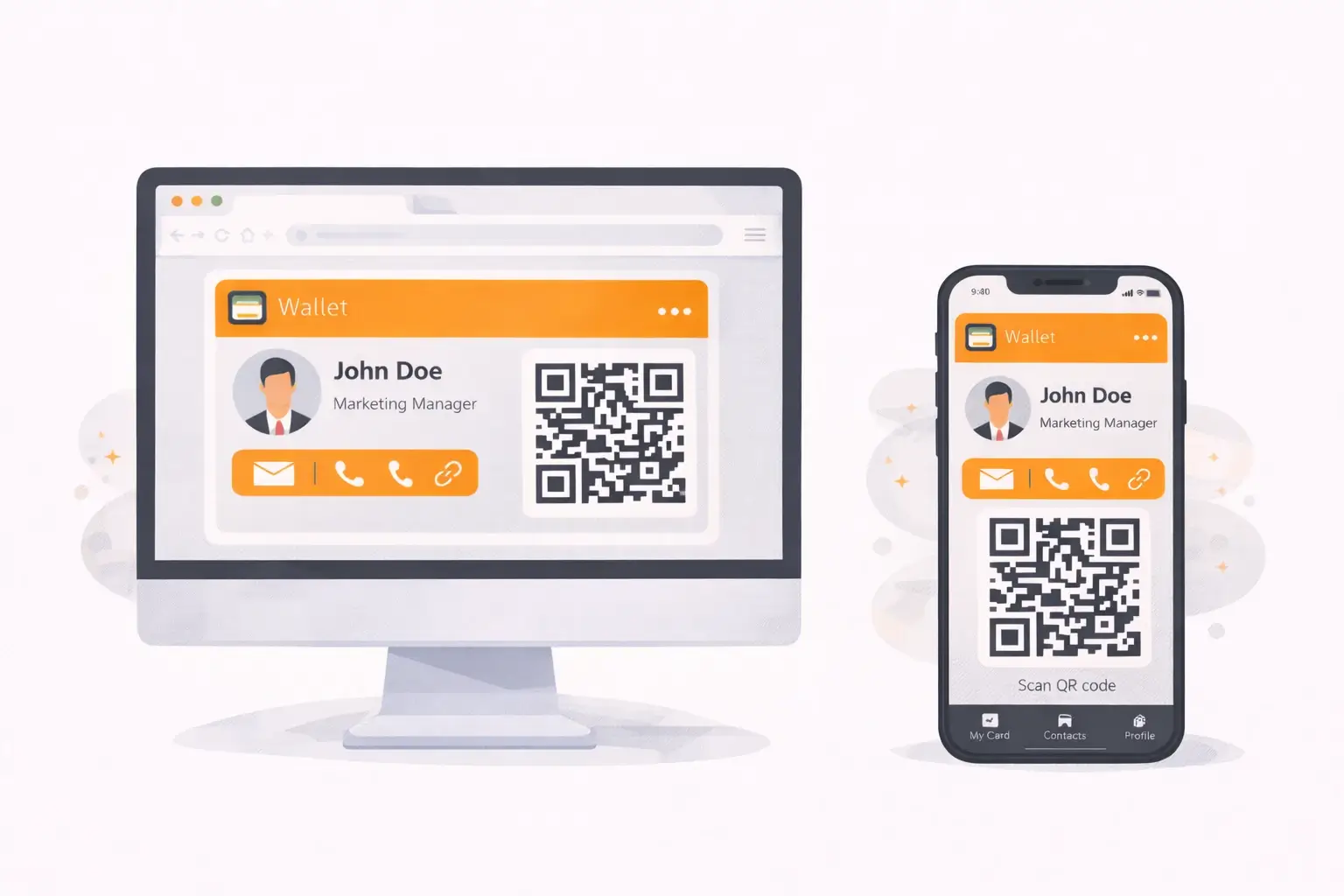
The best digital business card platforms don’t force you to choose.
Platforms like Cardikit and Blinq combine:
-
App-based convenience and
-
Web-based accessibility
That means:
-
You can manage cards in an app or browser
-
Recipients never need to install anything
-
Teams and individuals both win
This hybrid approach is quickly becoming the gold standard.
So… Which Is Better?
Here’s the honest answer:
-
Choose a digital business card app if you want advanced features, offline tools, and heavy daily use.
-
Choose a web-based digital business card if you want instant sharing, zero friction, and maximum adoption.
-
Choose a platform that offers both if you want future-proof flexibility.
That’s why hybrid platforms are dominating 2026. This is why this question matters less than it used to.
👉 If you want a deeper breakdown of the top platforms that do this best, make sure to check out the guide:
“11 Best Digital Business Card Apps & Platforms for 2026 (Ranked)”
Networking should feel effortless. Your digital business card should too.