If you’re comparing Blinq vs Cardikit, you’re not just choosing a digital business card app. You’re choosing how your contacts are captured, saved, and followed up with.
Both platforms offer QR codes, NFC compatibility, and shareable links. The difference comes down to workflow, scalability, and the level of complexity you actually want.
This guide breaks down:
- Core differences
- Sharing features
- Analytics and lead capture
- Team capabilities
- Pricing
- Real-world recommendations
Executive summary
Choose Blinq if you want:
- A business-oriented platform with CRM syncing
- AI-powered “relationship intelligence” features
- Structured lead capture workflows
- Enterprise rollout controls
Choose Cardikit if you want:
- A fast, web-first digital business card
- Multiple cards under one account
- Modern design with minimal friction
- A clean upgrade path to analytics and lead capture
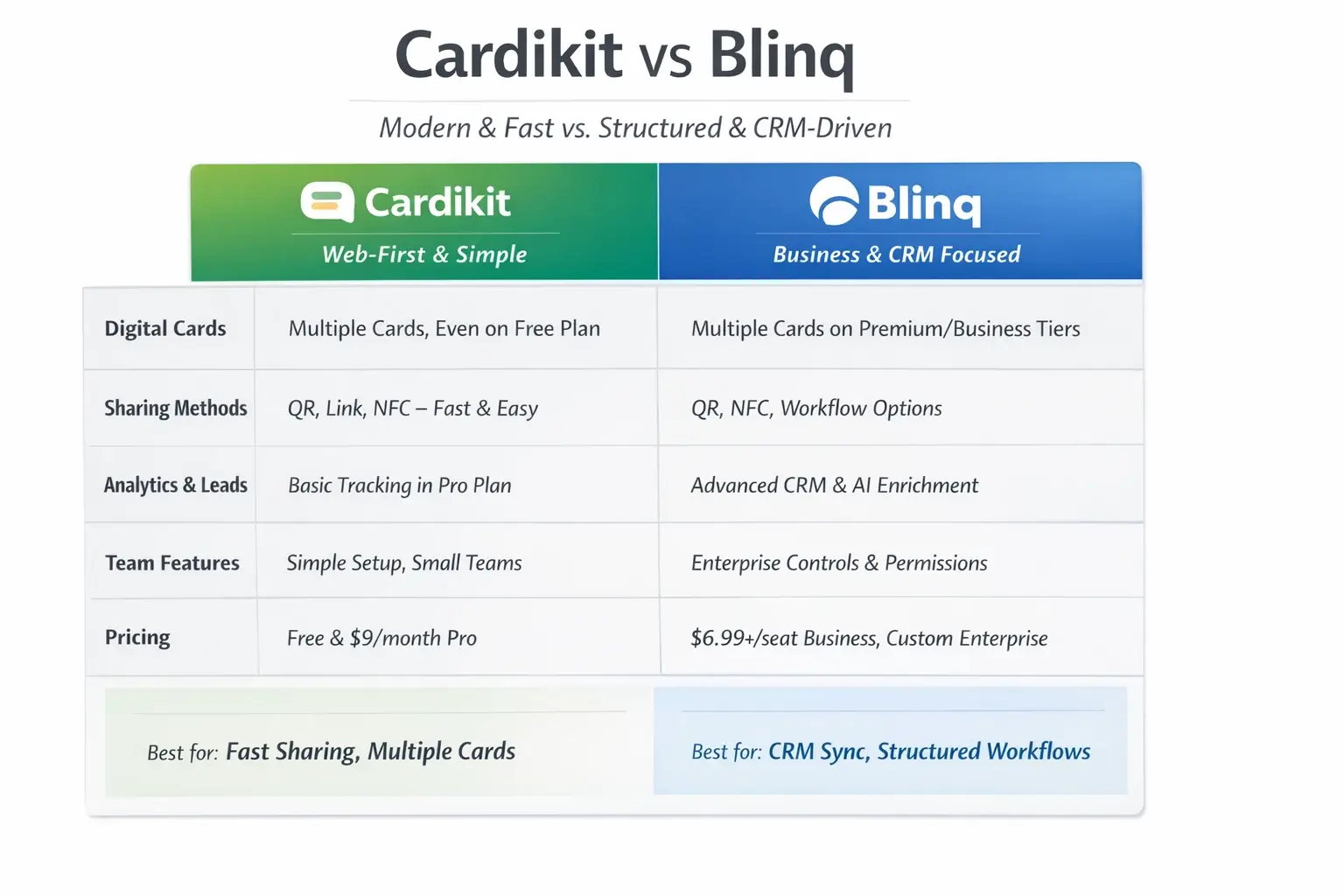
Below is a no-fluff comparison table, followed by a feature-by-feature breakdown, pricing comparison, pros/cons, and real-world recommendations.
What Blinq is (and what it's best at)
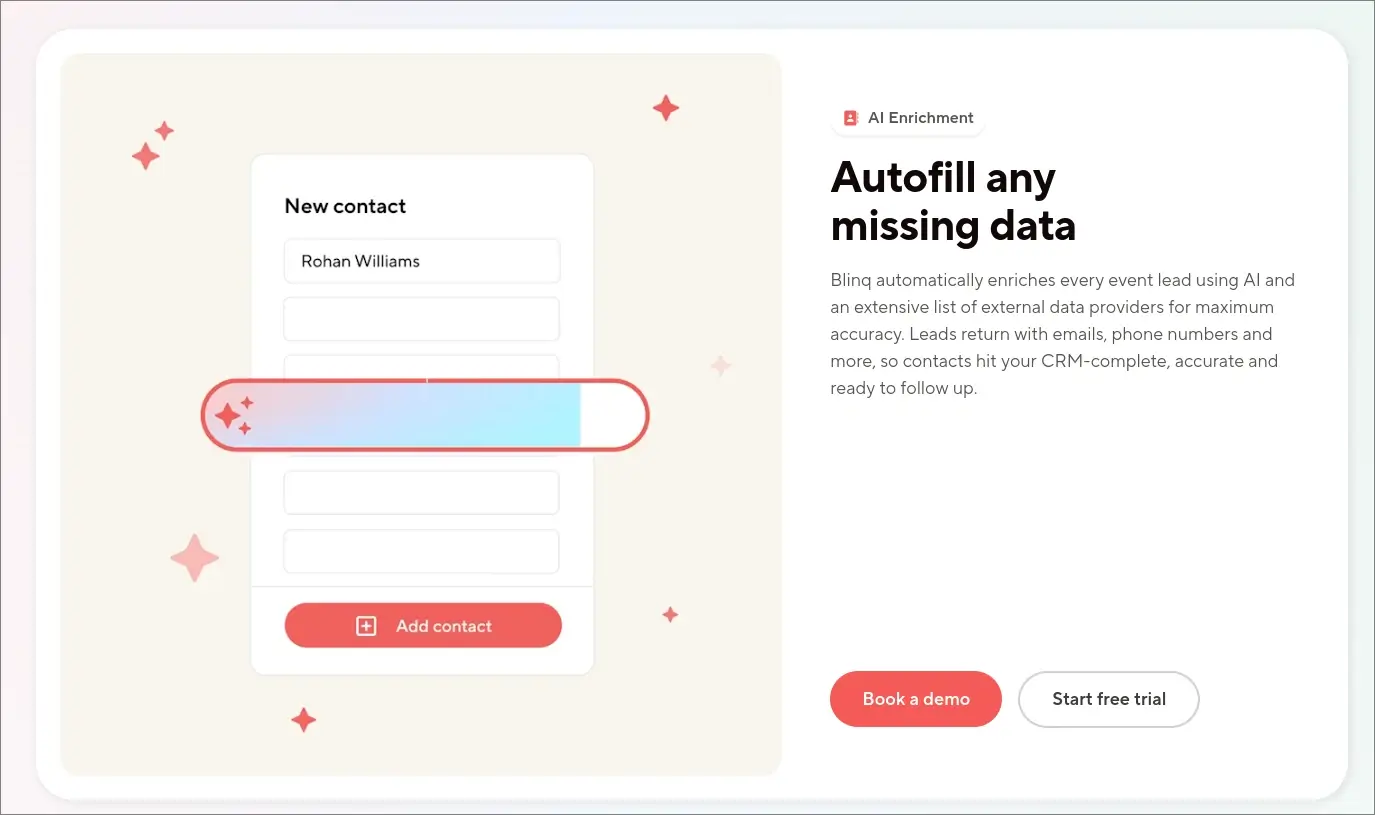
Blinq positions its higher tiers around "Relationship Intelligence," including contact enrichment and AI notetaking, plus workflows for capturing leads and syncing to CRMs.
On its Pricing page, Blinq lists (by plan) capabilities such as AI contact enrichment, a card/event badge scanner, exports, and Business-tier features like CRM sync, campaigns/attribution, and card analytics.
What Cardikit is (and what it's best at)
Cardikit is built around a web-first experience: create a clean digital business card, share it instantly, and update it once so your link (and QR) always stays current.
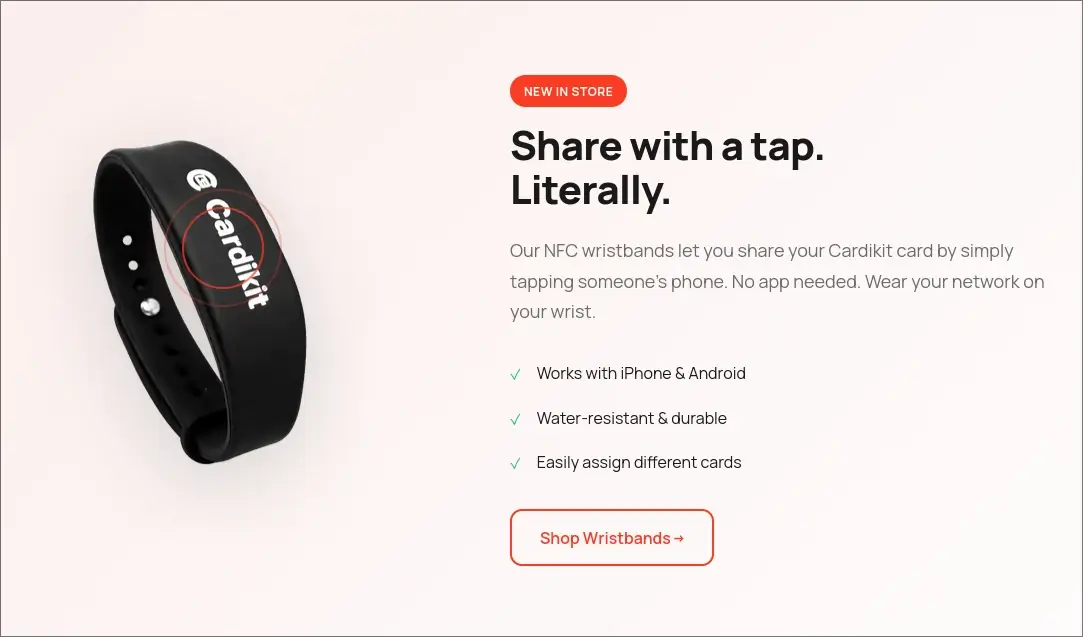
Cardikit's homepage emphasizes fast setup, sharing via QR/link/NFC, multi-card support on the free plan, and Pro upgrades for premium themes, analytics, lead capture, and custom QR.
If you want a broader tool roundup, see: 11 Best Digital Business Card Apps & Platforms for 2026.
Blinq vs Cardikit: Core differences
Blinq in one sentence:
A business-focused digital business card platform with structured team plans, CRM integrations, and AI-assisted relationship tools.
Cardikit in one sentence:
A web-first digital business card builder designed for fast sharing, multi-card flexibility, and modern, lightweight networking.
Sharing methods: QR, link, NFC
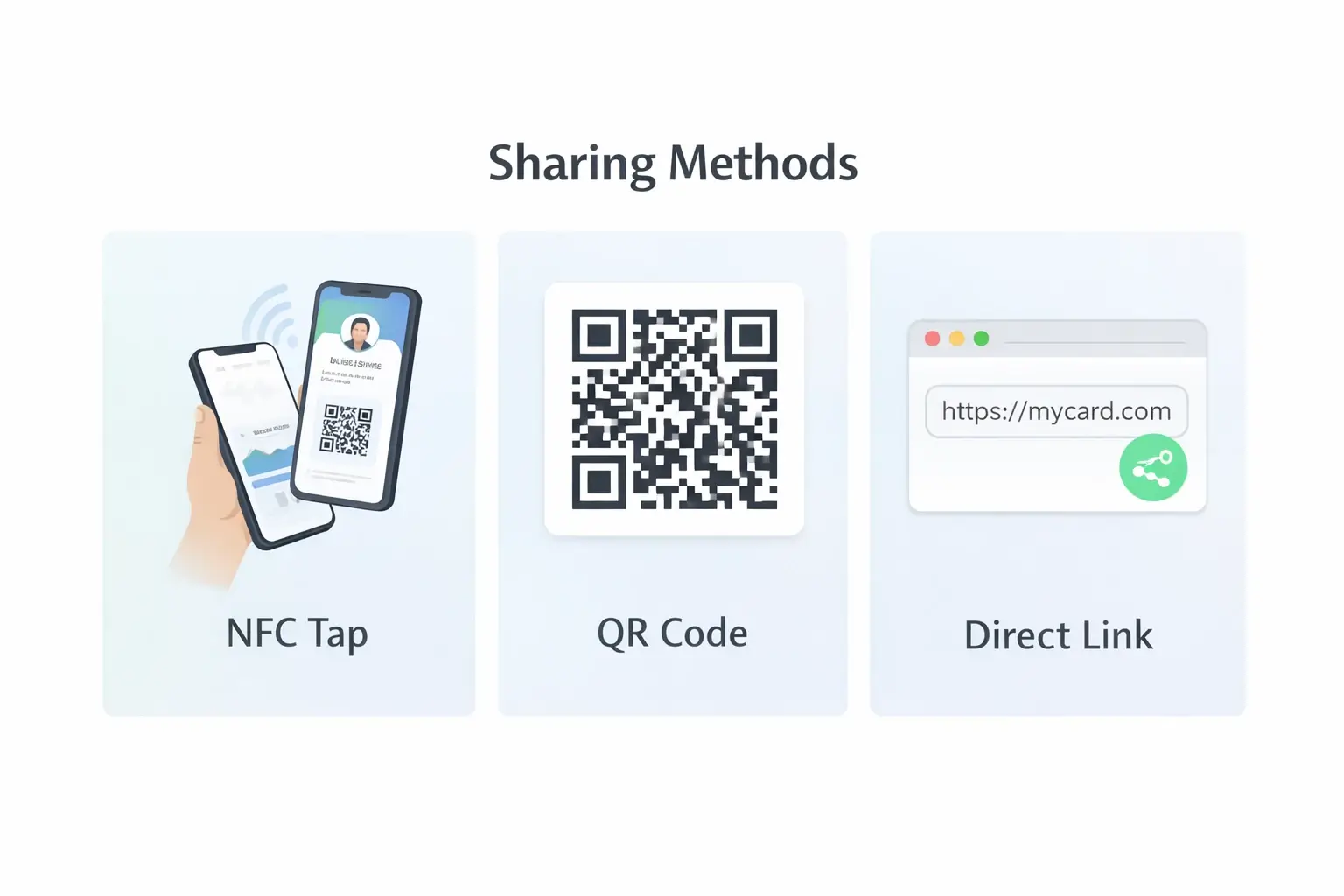
Both Blinq and Cardikit support the three core sharing methods required in 2026:
- QR code scanning
- Shareable personal link
- NFC tap functionality
Where they differ is in positioning.
Blinq supports QR, wallet, and NFC options depending on plan level, with additional workflow features layered into business tiers.
Cardikit focuses on simplicity: generate a clean QR instantly, share your direct link, or connect it to an NFC device. The experience emphasizes speed and minimal friction.
For real-world networking, speed often matters more than the depth of features.
Multi-card flexibility
If you have multiple identities (consultant + founder + side project), multi-card support becomes important.
Blinq:
- Multiple cards are supported on premium and team tiers.
Cardikit:
- Multiple cards are included on the free plan.
- Unlimited cards included in Pro.
If you frequently switch contexts, Cardikit’s structure may feel lighter and more flexible.
Analytics and engagement tracking
Analytics help you understand:
- How often your card is viewed
- Which links are clicked
- Whether your networking is converting
Blinq:
- Analytics included in the Business plan and above.
- Tied into broader CRM and workflow capabilities.
Cardikit:
- Analytics are included in the Pro plan.
- Designed to show engagement clearly without complex dashboards.
If you’re a structured sales team, Blinq’s CRM-first model may align better.
If you’re an individual or small team wanting simple insight, Cardikit keeps it clean.
Lead capture workflows
This is where the platforms diverge more clearly.
Blinq offers:
- Lead capture tools within the Business tier
- AI contact enrichment
- Workflow-based follow-up capabilities
- CRM syncing
Cardikit offers:
- Lead capture forms in Pro
- Clean “save contact” experiences.
- Simple capture without heavy workflow overhead
If your networking requires structured automation and CRM pipelines, Blinq has the edge.
If your goal is fast sharing + frictionless saving, Cardikit keeps it lightweight.
Team management and scaling
If you’re evaluating for a company, these factors matter:
- Branding controls
- Onboarding and offboarding
- Permissions
- CRM integration
- Admin oversight
Blinq is clearly positioned for enterprise and regulated industries, with structured business and enterprise tiers.
Cardikit focuses on simplicity for individuals and small teams, with enterprise options available but less workflow-heavy.
Pricing comparison (2026)
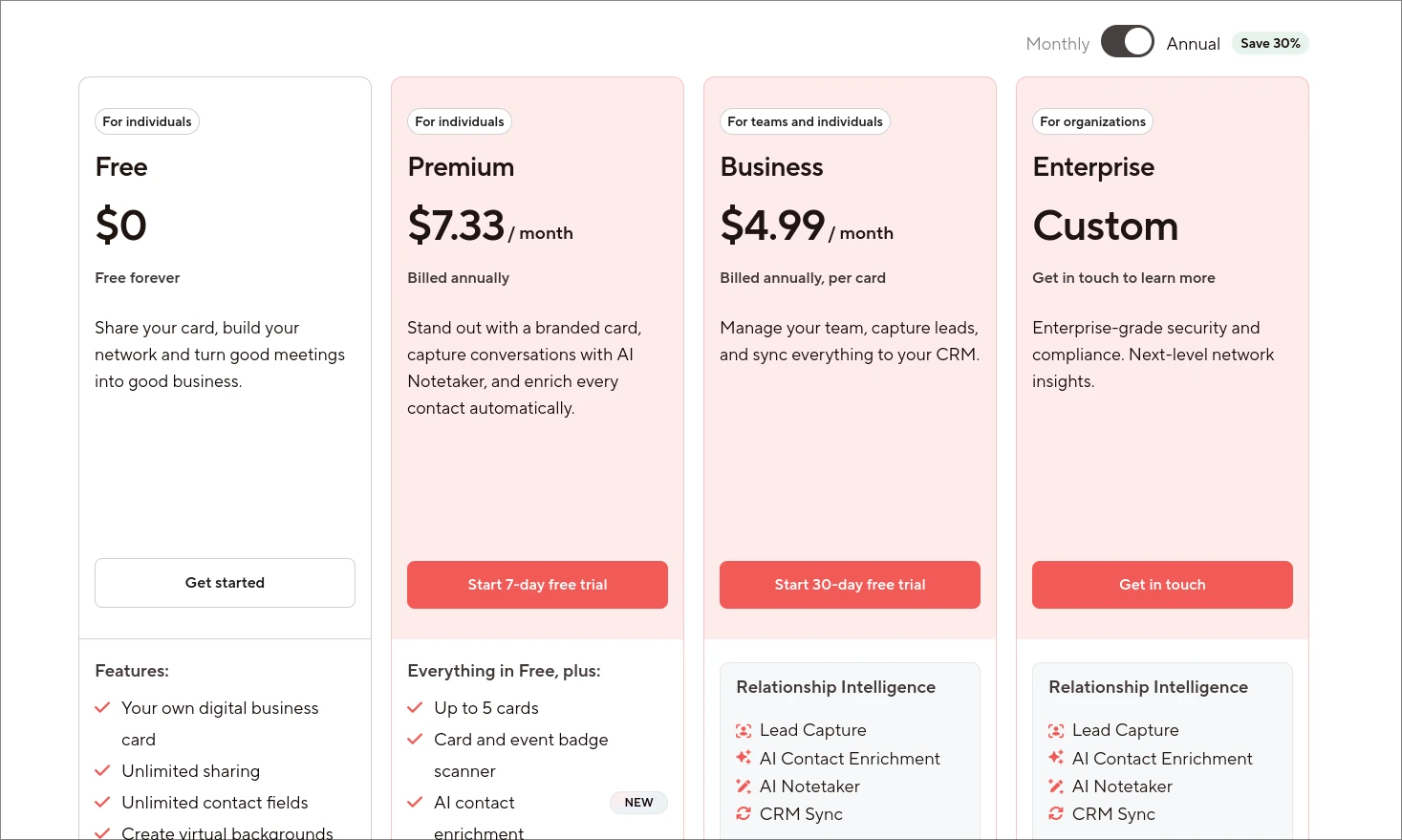
Blinq pricing
- Free plan available
- Premium: $9.99/month (monthly billing) or $7.33/month (annual billing)
- Business: $6.99/month per seat (monthly) or $4.99/month per seat (annual)
- Enterprise: custom pricing
Pricing scales per user or per card, which can increase the cost significantly depending on your team size.
Cardikit pricing
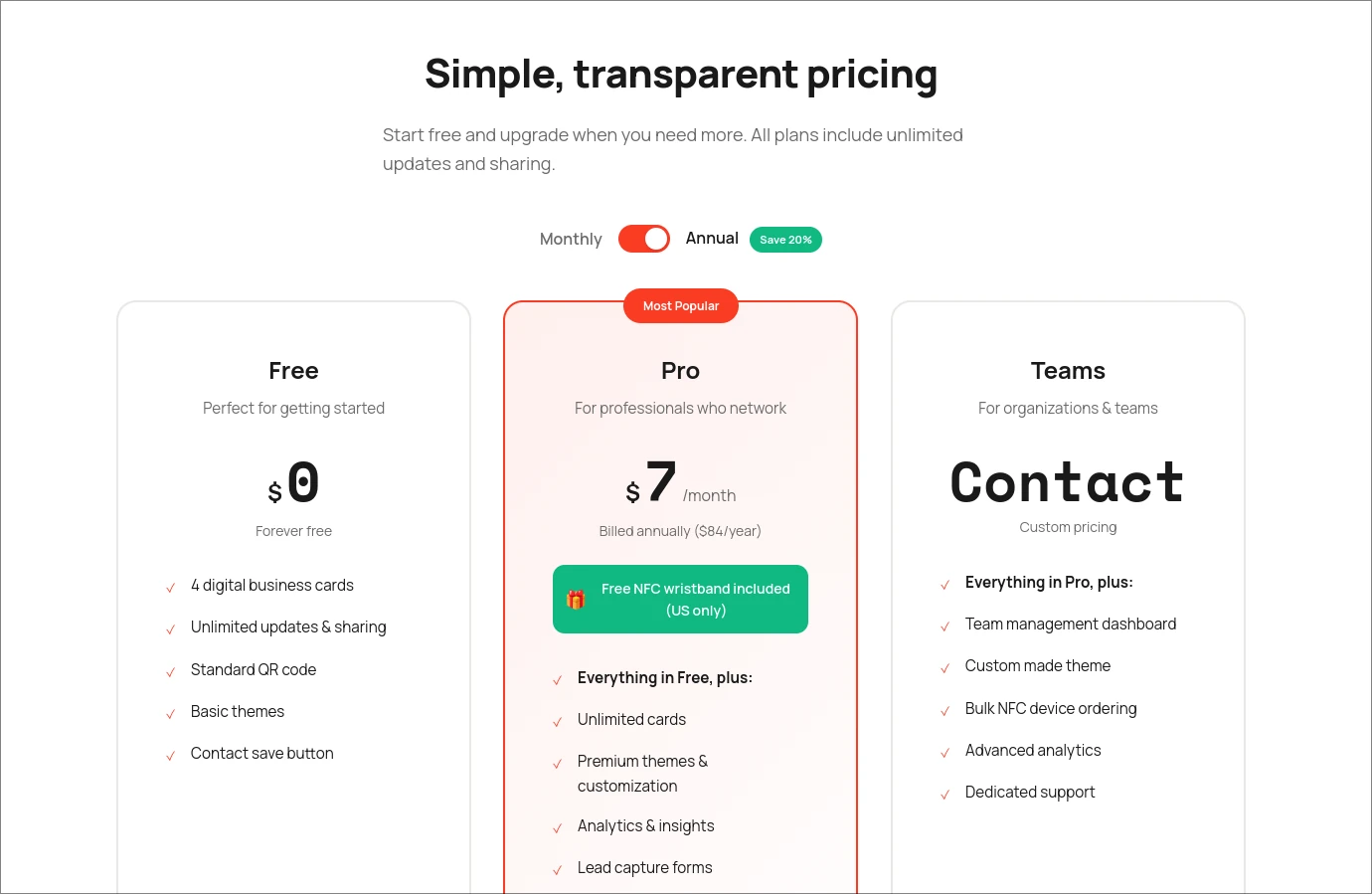
- Free plan available (includes multiple cards)
- Pro: $9/month
- Teams: custom pricing
Cardikit pricing is simpler and not per-card structured at the base level.
For teams, calculate your total headcount × required features before choosing.
Pros and cons
Blinq
Pros
- Strong CRM integration focus
- AI-powered relationship intelligence
- Clear business-tier packaging
- Mature enterprise positioning
Cons
- Pricing scales per card/user
- Advanced features tied to higher tiers
- More complex than some users need
Cardikit
Pros
- Web-first, fast sharing
- Multiple cards, even on the free tier
- Modern design and lightweight UX
- Simple upgrade path
Cons
- Newer brand compared to incumbents
- Less enterprise workflow depth today
Real-world recommendations
Choose Blinq if:
- You need CRM sync and structured workflows.
- You’re rolling out to a mid-size or large team.
- You want AI-assisted contact enrichment.
- You operate in regulated or enterprise environments.
Choose Cardikit if:
- You want fast, frictionless sharing.
- You manage multiple professional identities.
- You prefer a modern, minimal design.
- You don’t want workflow complexity.
FAQ
Is Blinq worth it?
If you need CRM integration, analytics, and AI-based enrichment tools, Blinq can justify its cost. If you only need simple digital card functionality, it may be more than necessary.
Is Cardikit free?
Yes. Cardikit offers a free plan and paid upgrades for analytics, lead capture, and premium features.
Which is better for teams?
Blinq generally suits structured CRM-driven teams. Cardikit suits modern, agile teams that prioritize simplicity.
Do I need NFC?
No. QR codes and shareable links work universally. NFC is optional.
Final verdict
Blinq and Cardikit solve the same category problem in different ways.
Blinq is workflow-heavy and CRM-centric.
Cardikit is fast, modern, and web-first.
The better choice depends entirely on whether you value structured enterprise tooling or frictionless simplicity.
Try Cardikit in minutes.
If you want a modern, web-first digital business card you can share instantly, start free.